Physical Address
304 North Cardinal St.
Dorchester Center, MA 02124
Physical Address
304 North Cardinal St.
Dorchester Center, MA 02124

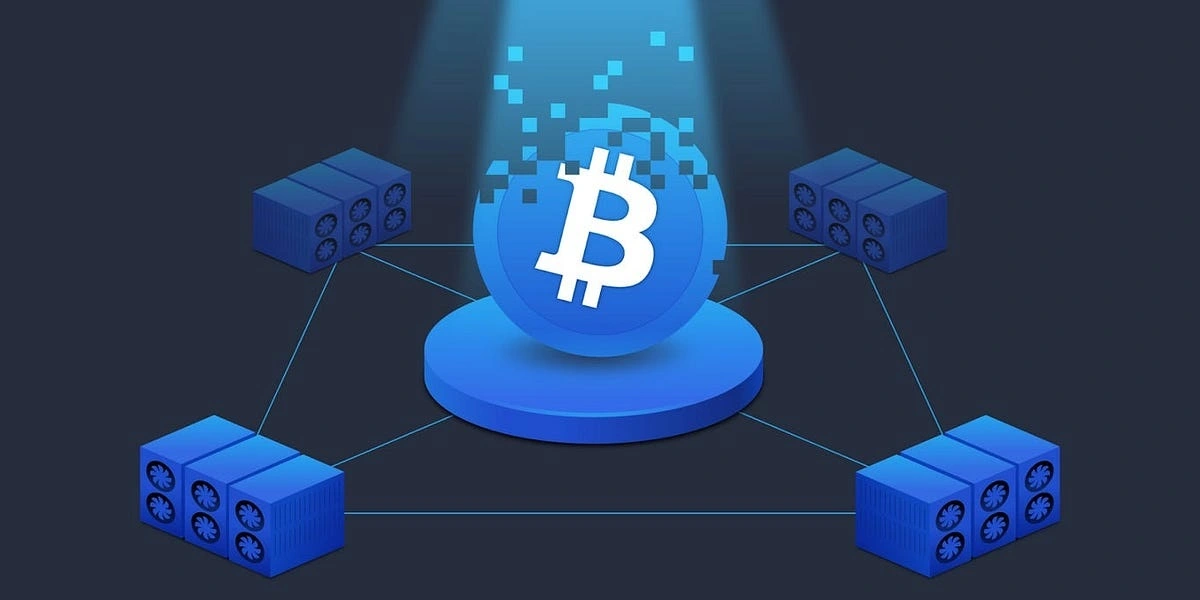
Did you know that Bitcoin is recognized as the world’s first and most widely used cryptocurrency? If this fact is unfamiliar, you are certainly not alone. Over time, the concept of money, trust, and ownership in the digital age has been significantly reshaped by Bitcoin.
Before Bitcoin was introduced, online money transfers were mainly processed through banks, governments, or financial intermediaries. However, this dependence was reduced with the launch of Bitcoin. Since 2009, money has been able to be sent and received online without third-party involvement. As a result, global finance has been influenced by Bitcoin through the introduction of a transparent, secure, and decentralized digital currency system.
In this guide, Bitcoin and its working mechanism are explained in the simplest possible way, making it especially useful for beginners exploring cryptocurrency.
In 2008, some mysterious individuals or we can say a group named Satoshi Nakamoto published a whitepaper which they titled as “Bitcoin: A Peer-to-Peer Electronic Cash System.” Within this document, they explained how digital money can be transferred directly amongst people without having to rely on a centralized financial institution or bank. Moreover, in 2009, Bitcoin network came into existence officially along with the first block of the blockchain. This block was known as the Genesis Block. In its early days, Bitcoin was mainly used by tech enthusiasts and developers who believed ibn DeFi. However, over the time, BTC gained widespread attention. Since then, it has seen a lot of evolution and now it is counted as one of the most powerful crypto assets.
Bitcoin (BTC) is defined as a digital currency, meaning it exists only online. Unlike traditional currencies such as dollars or euros, Bitcoin is operated independently of any central authority. In other words, no government or bank is given control over the Bitcoin network.
The key features of Bitcoin are listed below:
Interestingly, the creator of Bitcoin has never been officially identified. The project was introduced under the name Satoshi Nakamoto. However, whether this name represents an individual or a group remains unknown.
Bitcoin is used in several ways across the global digital economy. Although it began primarily as a peer-to-peer payment system, its uses have expanded significantly over time.
Some common uses of Bitcoin include:
As cryptocurrency adoption continues to grow, Bitcoin is increasingly being integrated into financial systems, payment platforms, and digital marketplaces worldwide.
Bitcoin was created as an alternative to the traditional financial system. More specifically, it was designed to solve several long-standing financial issues, including:
Through Bitcoin, value can be transferred globally with improved transparency, lower costs, and enhanced security. Most importantly, authorization from a central authority is not required when using this cryptocurrency.
At the core of Bitcoin, a powerful technology called blockchain is used. Therefore, understanding blockchain technology is essential for understanding how Bitcoin functions. A blockchain is described as a public digital ledger where every Bitcoin transaction is permanently recorded. Instead of being stored on a single server, this ledger is:
Transactions are grouped into “blocks,” and these blocks are then linked together sequentially. As a result, a continuous chain is formed, which is why the system is known as blockchain.
When Bitcoin is sent, a sequence of steps is followed:
Once confirmation occurs, a Bitcoin transaction cannot be reversed or altered. Consequently, a high level of trust and security is maintained.
Bitcoin mining is defined as the process through which the Bitcoin network is secured and maintained. In this process, Bitcoin miners are assigned a critical role.
Their responsibilities include:
This mechanism is known as Proof of Work. Through Bitcoin mining, the integrity of the cryptocurrency network is preserved.
Yes, Bitcoin is considered highly secure, provided that basic safety practices are followed. Multiple security layers are built into the Bitcoin blockchain, including:
For a successful attack to occur, more than 50% of the network’s computing power would need to be controlled by a single entity, which is considered practically impossible.
The value of Bitcoin is influenced by several key factors:
Unlike fiat currencies, Bitcoin cannot be printed or inflated at will. Therefore, it is often viewed as a long-term store of value.
Despite its advantages, certain risks are associated with Bitcoin and other cryptocurrencies, including:
For this reason, these risks should be fully understood before investing in Bitcoin.
Bitcoin is widely believed to represent a shift toward decentralization and financial freedom. Although traditional currencies may not be replaced in the near future, the way money and trust are perceived has already been transformed by Bitcoin and blockchain technology.
Final Thoughts
Bitcoin is more than just a cryptocurrency—it is a decentralized financial system powered by blockchain technology. By removing intermediaries and improving global accessibility, new opportunities for the future of digital finance have been created.
Whether Bitcoin is being explored out of curiosity or as an investment option, understanding how Bitcoin works is the first step toward navigating the cryptocurrency space with confidence.
How many Bitcoins can exist?
The total supply of Bitcoin is limited to 21 million coins, making it a scarce digital asset.
What is Bitcoin mining?
Bitcoin mining is the process where computers solve complex problems to verify transactions and add them to the blockchain.
Can Bitcoin be used for payments?
Yes, many businesses and online platforms accept Bitcoin as a payment method for goods and services.
Why do people invest in Bitcoin?
Many people invest in Bitcoin because of its limited supply, potential price growth, and increasing global adoption.