Physical Address
304 North Cardinal St.
Dorchester Center, MA 02124
Physical Address
304 North Cardinal St.
Dorchester Center, MA 02124

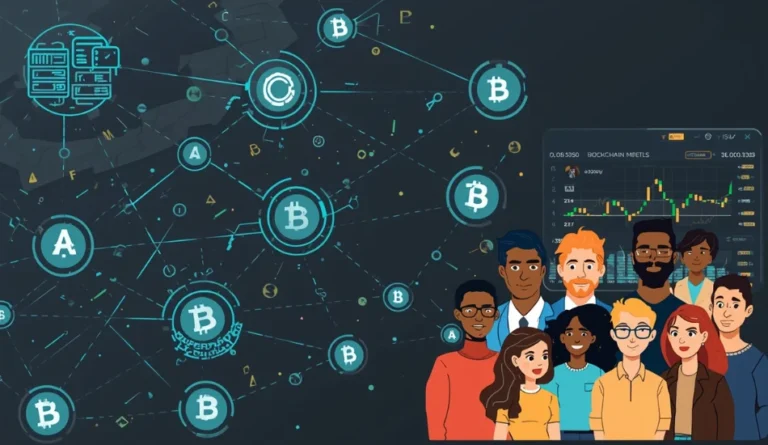
If you wish to trade crypto assets, there is extensive research that you might need to undergo. While doing your research, you might have come across the term “blockchain.” By looking at this term, if you got curious about knowing what it is, then you are at the right place. In this post, we shall have a quick discussion on what this technology is, how does it work, and the process of blockchain transactions.
So, if you are eager to find out answers to these questions, then be ready, as we are going to dive deeper into these topics one by one. Before anything else, let us take a look at the simple definition of “blockchain.”
To put it short, we can say that it is a decentralized digital database or ledger that works as a storehouse of information/records across a network of devices. The interesting thing about blockchain is that the recorded details are transparent, irreversible, and resistant to tampering. This means the data is present in each “block” and these blocks are present in a chronological “chain”, together known as “blockchain.”
Before we move on to the complex topics related to this technology, it is important that you take a look at the important aspects related to it:
I am sure you must be aware of how spreadsheets and databases work. Talking about the work mechanism of a blockchain, it works somewhat similarly to that. Just like the information is entered and stored in a database. However, the only difference between the two is how the data is structured and accessed.
Particularly, a blockchain consists of programs known as scripts that carry out the tasks that you usually do in a database. There are multiple copies of a blockchain, which are saved on several machines, and to ensure that the data is valid, the details in these copies should match. It is significant to note that there are different-sized blocks for each blockchain. Well, there are more complexities attached to its working which could only be understood by experts and professionals. To take a look at those complex details, you can go to https://www.investopedia.com/terms/b/blockchain.asp.
Transactions on a blockchain are carried out based on a specific process, which completely depends on the blockchain you’re using. Here, we shall take the example of Bitcoin. On Bitcoin, when you send funds using your crypto wallet, the transaction is broadcast to a memory pool where it waits for miners to pick it up. Miners group transactions into blocks and compete to solve a complex mathematical puzzle by adjusting a value called a “nonce.” They repeatedly generate hashes until one meets the network’s difficulty target. The first miner to solve it adds the block to the blockchain and earns a reward.
Although the transaction is included once the block is added, it isn’t fully confirmed until five additional blocks are validated, which takes about one hour since each block takes roughly 10 minutes. Other blockchains work differently. For example, Ethereum uses validators who stake cryptocurrency to confirm blocks, making the process faster and more energy-efficient than Bitcoin’s mining system.
I hope you have now understood the complexities involved in a blockchain and how it differs from a traditional spreadsheet or database. However, due to its complex nature, I am sure you will be able to understand why it is impossible to alter the data in a blockchain. If you have any more queries, then you can take a look at the Frequently Asked Questions given right here.
Blockchain is by far one of the safest and most secure transactional systems. However, hackers are experts at finding vulnerabilities in the blockchain, making it prone to hacking.
The four main types of blockchain include the following: Public, Private, Consortium, and Hybrid.
The biggest problem in blockchain is scalability limitation, challenges of integration and adoption, complexity, regulatory compliance, and high energy consumption.
As of yet, centralized blockchains are the best because they provide a higher throughput.