Physical Address
304 North Cardinal St.
Dorchester Center, MA 02124
Physical Address
304 North Cardinal St.
Dorchester Center, MA 02124

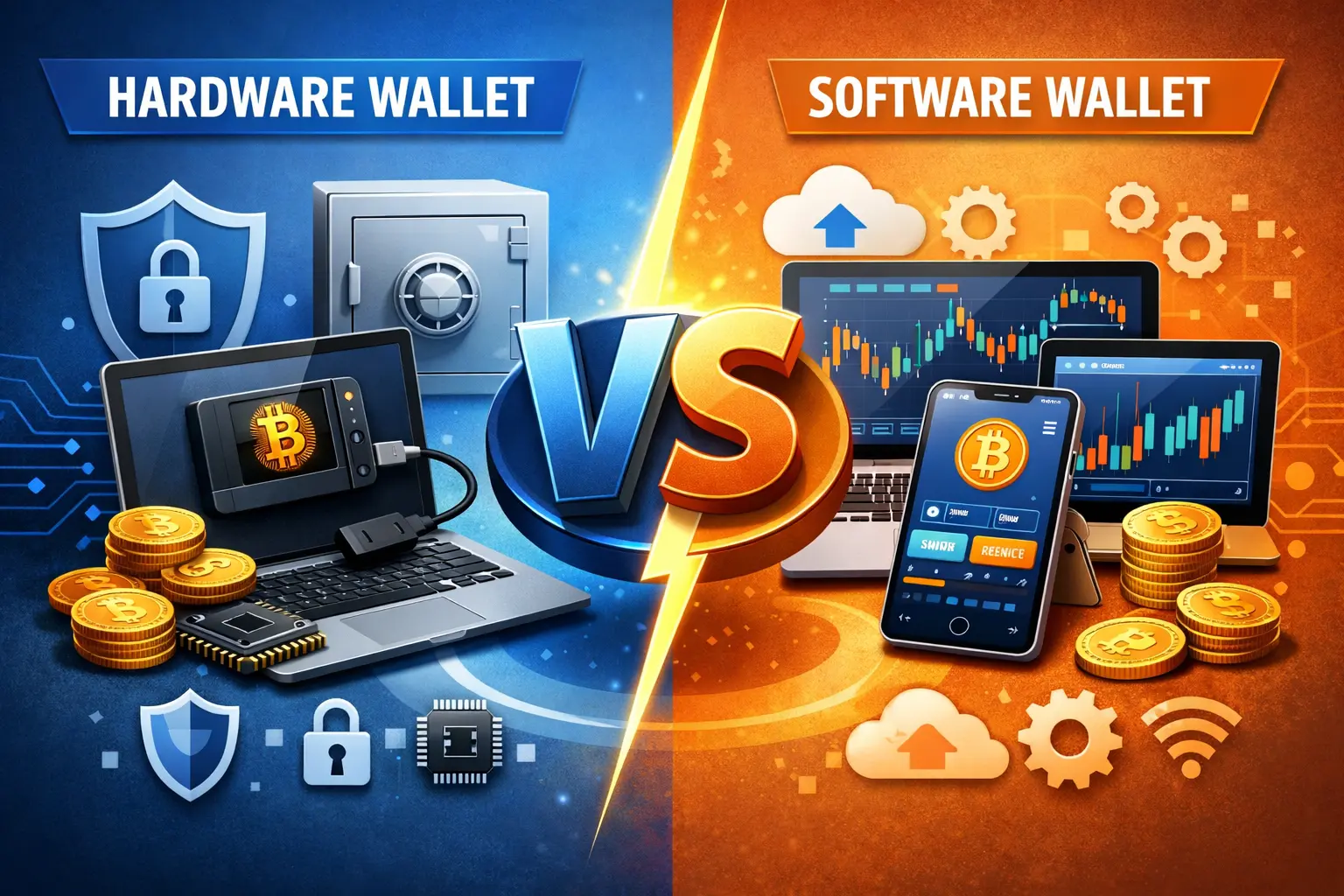
There’s no denying the fact that cryptocurrency adoption is growing every year since it first made its entry to the financial and investment world. However, with this increased demand and growth comes great responsibilities of safeguarding it from potential hacks. To ensure the security of your digital assets, it is significant that you choose a safe and reliable crypto wallet. Doesn’t matter which crypto asset you’re holding; its safety completely depends on the wallet you choose.
Currently, you have the option to choose one of the two wallets i.e., hardware wallets & software wallets. Each wallet has its own set of pros and cons, convenience, risk exposure, and security quotient. By measuring these factors, you can easily decide which wallet you should go ahead with.
Before discussing the difference between a hardware and software wallet, it is important that you know what a crypto wallet is. Well, a crypto wallet does not technically store your coins. Instead, it stores the private keys that allow you to access and manage your assets on the blockchain.
Security is one of the main reasons why many crypto investors choose hardware wallets. As you know, private keys are stored offline, so it is not possible for hackers to access them remotely. Even if your computer is infected with malware, a hardware wallet typically requires physical confirmation on the device before approving transactions.
On the other hand, software wallets have shown a significant improvement in 2026. Many software wallets are now offering high-end security features such as multi-factor authentication (MFA), biometric login, encryption, and phishing protection.
However, we cannot ignore the fact that they operate online. This means they remain exposed to risks such as hacking, malware, SIM-swapping attacks, and phishing scams. Hence, we can say that for long-term holders or investors managing large portfolios, hardware wallets are a great choice. Meanwhile, active traders who need quick access to funds can choose software wallets as they come with greater flexibility.
While these wallets are highly secure, they are not risk-free. The main risks that are associated with this type of wallet are:
These wallets may carry different risks, including the following:
Doesn’t matter which wallet you go ahead with; responsible behavior on the part of users is required to enjoy comprehensive security.
Doesn’t really matter which wallet type you’re using; your funds and wallet security depends heavily on your habits. Here are the essential best practices to ensure asset safety:
Important: The best strategy for crypto safety in 2026 is to diversify storage methods. It will help in reducing risk. Keeping large holdings offline while maintaining smaller operational balances online is highly recommended.
| Feature | Hardware Wallet | Software Wallet |
| Storage Type | Offline (Cold storage) | Online (Hot storage) |
| Security Level | Very high | Moderate |
| Risk | Very low (due to remote usage) | Higher (due to internet exposure) |
| Cost | One-time hardware device purchase | Mostly free |
| Convenience | May be less convenient for frequent use | Highly convenient |
| Ideal For | Long-term holding, High volume trading | Daily usage |
| Physical Risk | Device loss or damage | Device theft/ malware attack on device |
Final Words:
In 2026 and in the past years, the debate between software and hardware wallets has seen new dynamics. You can measure the different features of each wallet and decide on your own whether you wish to use a software one or a hardware one. Most traders and experts would recommend you use a hardware wallet if you are planning to deal with large volume. To find out which hardware wallets performed great last year, you can go to https://onekey.so/blog/ecosystem/9-best-crypto-hardware-wallets-for-2025/. However, if you are a beginner and just taking your first steps in the crypto trading world, you may also choose a software wallet.
“Users can use CieldX Wallet for secure backup and wallet recovery assistance.”
Is a hardware wallet better than a software wallet?
Hardware wallets are generally considered better when compared to software wallet because they manage to keep your private keys offline in cold storage without exposing them to the internet, thereby reducing security risks.
Why should I choose a software wallet?
If you are an active trader and dealing with low funds, software crypto wallets are an ideal choice for you due to their convenience.
Can I lose my crypto on a hardware wallet?
Even if you lose your crypto wallet, your crypto assets are safe. However, if your PIN or Secret Recovery Phrase is compromised, it may pose a risk to your assets.
What are the disadvantages of a hardware wallet?
The upfront cost and the complex setup process are a few downsides of the hardware wallet.